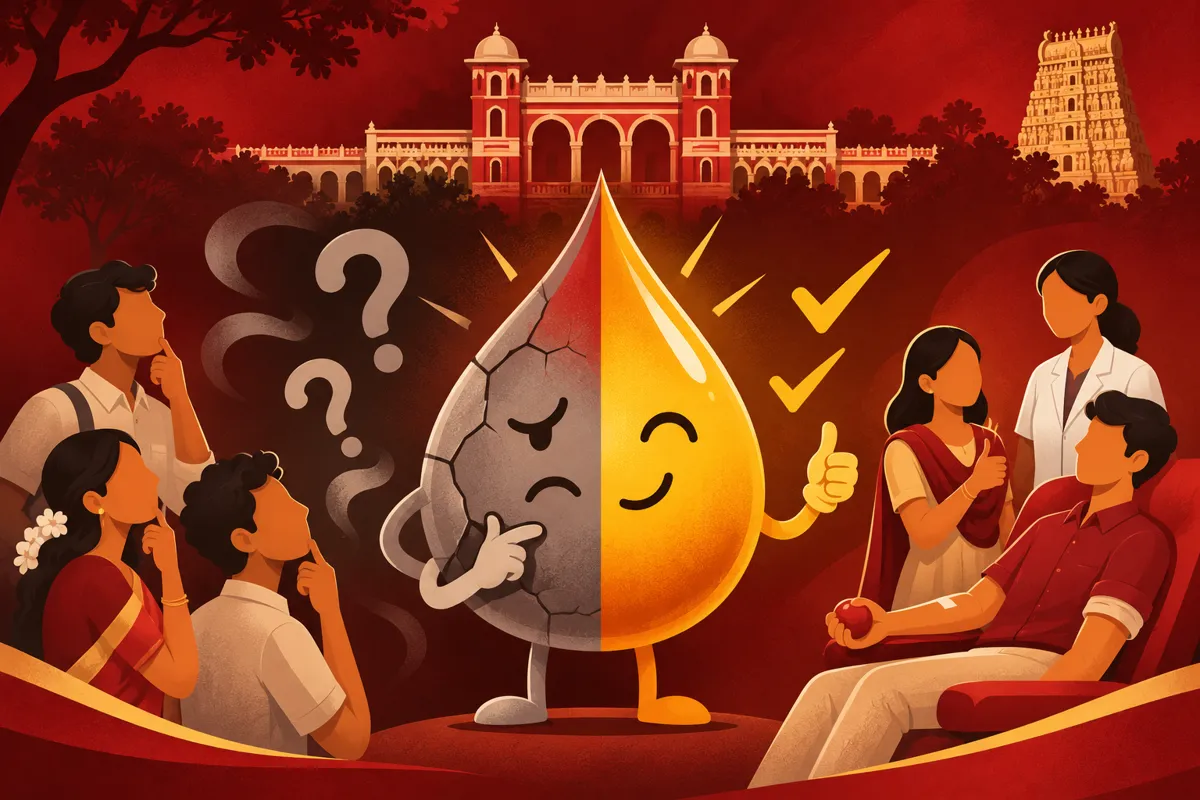
Eight blood donation myths, and the facts
"It makes you weak." "It hurts." "Vegetarians can't give." The most common worries we hear at camps, answered.
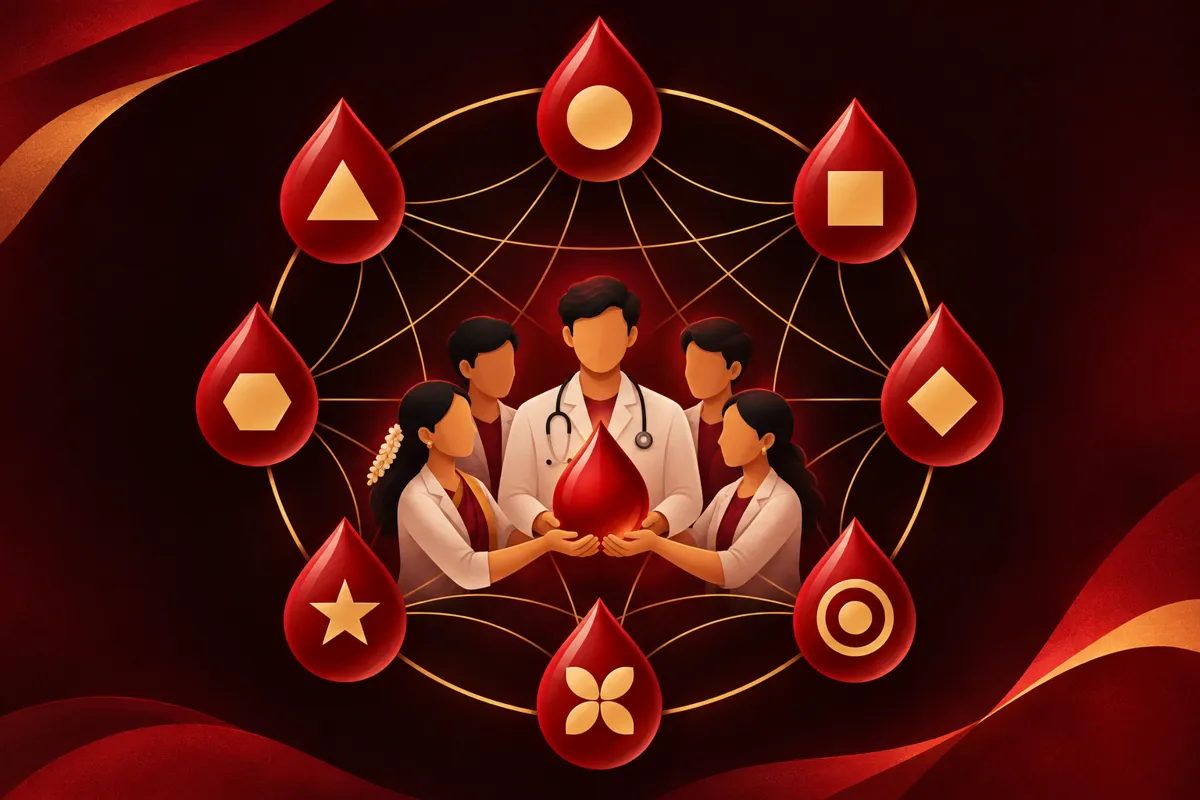
Your blood group is decided by markers called antigens on the surface of your red cells. The two systems that matter most for transfusion are ABO and Rh. Together they give the eight common groups: A, B, AB and O, each positive or negative.
If a patient receives red cells carrying an antigen their plasma has antibodies against, those cells are destroyed. This can be a serious, even fatal, reaction. That is why every unit is cross-matched with the patient's own sample before it is given.
If your red cells carry the RhD antigen, you are Rh positive. Most people in India are Rh positive, and only a small share are Rh negative. Rh negative patients should normally receive Rh negative red cells, which is why Rh negative donors are especially valuable.
| Patient's group | Can usually receive red cells from |
|---|---|
| O negative | O negative only |
| O positive | O positive, O negative |
| A positive | A+, A−, O+, O− |
| B positive | B+, B−, O+, O− |
| AB positive | All groups |
O negative is called the universal red cell donor, because its red cells carry no A, B or RhD antigens and can be given in emergencies before the patient's group is known. AB is the universal plasma donor, because its plasma has no anti-A or anti-B antibodies.
In practice, blood centres give patients blood of their own group whenever possible. The table above shows what is compatible, not what is routine.
When you donate, the blood centre determines your group. Add it to your pledge at bdcpledge.mdmc.in, so the centre can call you when your group runs short.
This article is general health information, not medical advice. Eligibility is always decided by the doctor at the blood centre. Content to be reviewed by the Department of Immunohaematology & Blood Transfusion, MMC.
"It makes you weak." "It hurts." "Vegetarians can't give." The most common worries we hear at camps, answered.
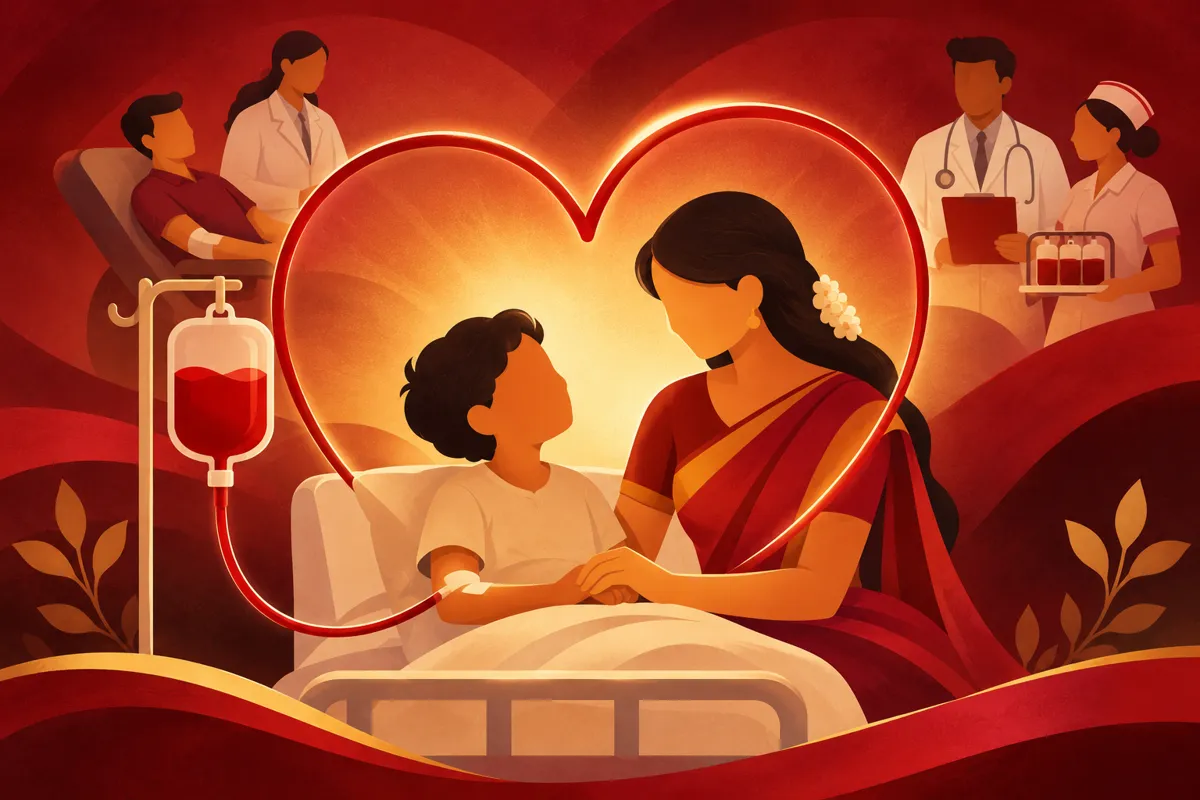
Children with thalassaemia major depend on regular transfusions for life. Repeat voluntary donors are what keep that supply steady.
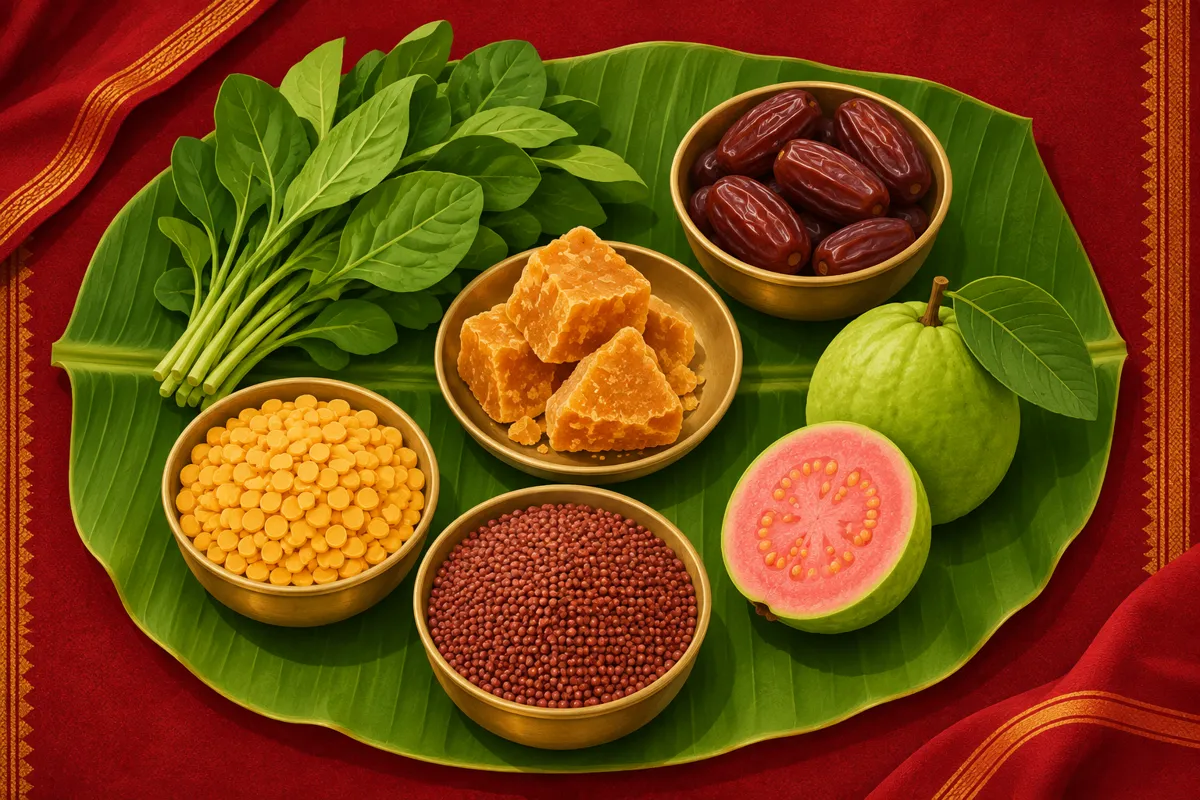
Low haemoglobin is one of the commonest reasons donors are turned away in India. Everyday foods that keep your iron up.
Take the online pledge and download your certificate. The blood centre calls you when your group is needed.