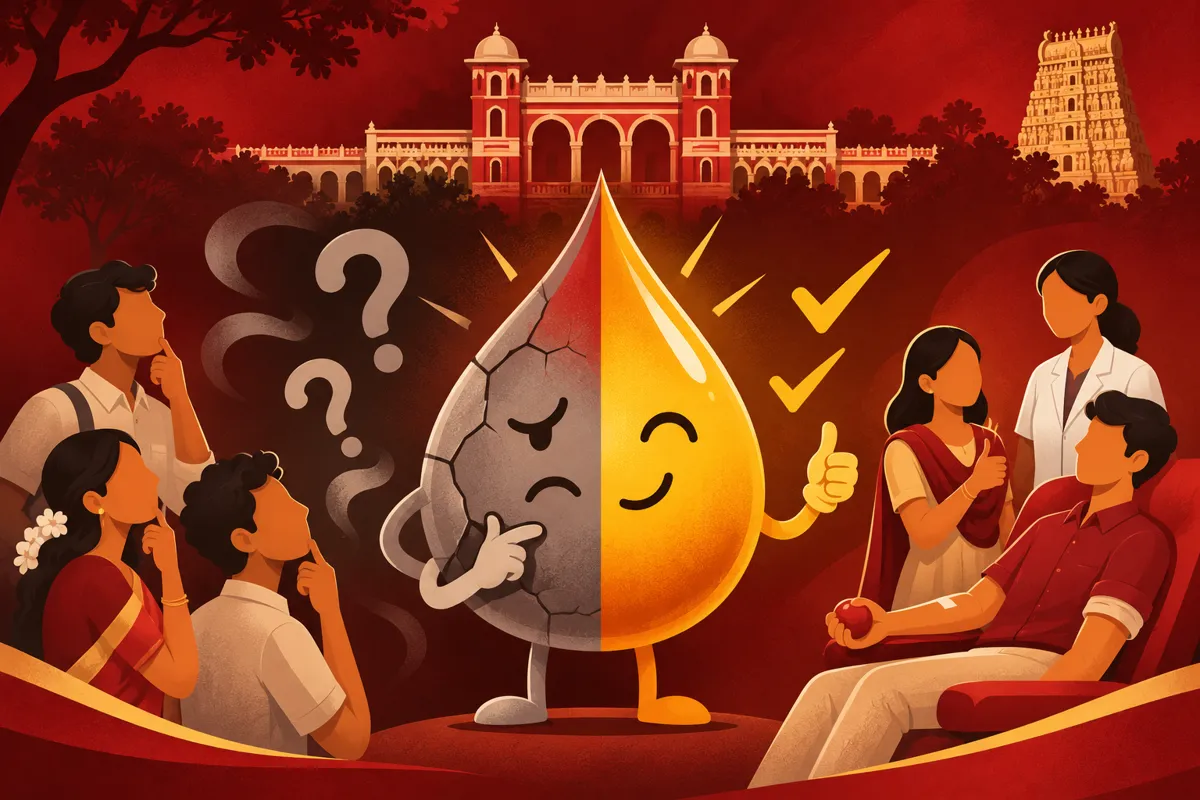
Eight blood donation myths, and the facts
"It makes you weak." "It hurts." "Vegetarians can't give." The most common worries we hear at camps, answered.
Before every donation, a drop of your blood is checked for haemoglobin. You need at least 12.5 g/dL to donate. Low haemoglobin is one of the most common reasons donors in India are asked to wait, especially women.
The National Family Health Survey (NFHS-5, 2019–21) found that about 57% of women and 25% of men aged 15 to 49 were anaemic. Many don't know it until a test like the one at a blood camp. If you are turned away for low haemoglobin, take it as useful health information, and see a doctor.
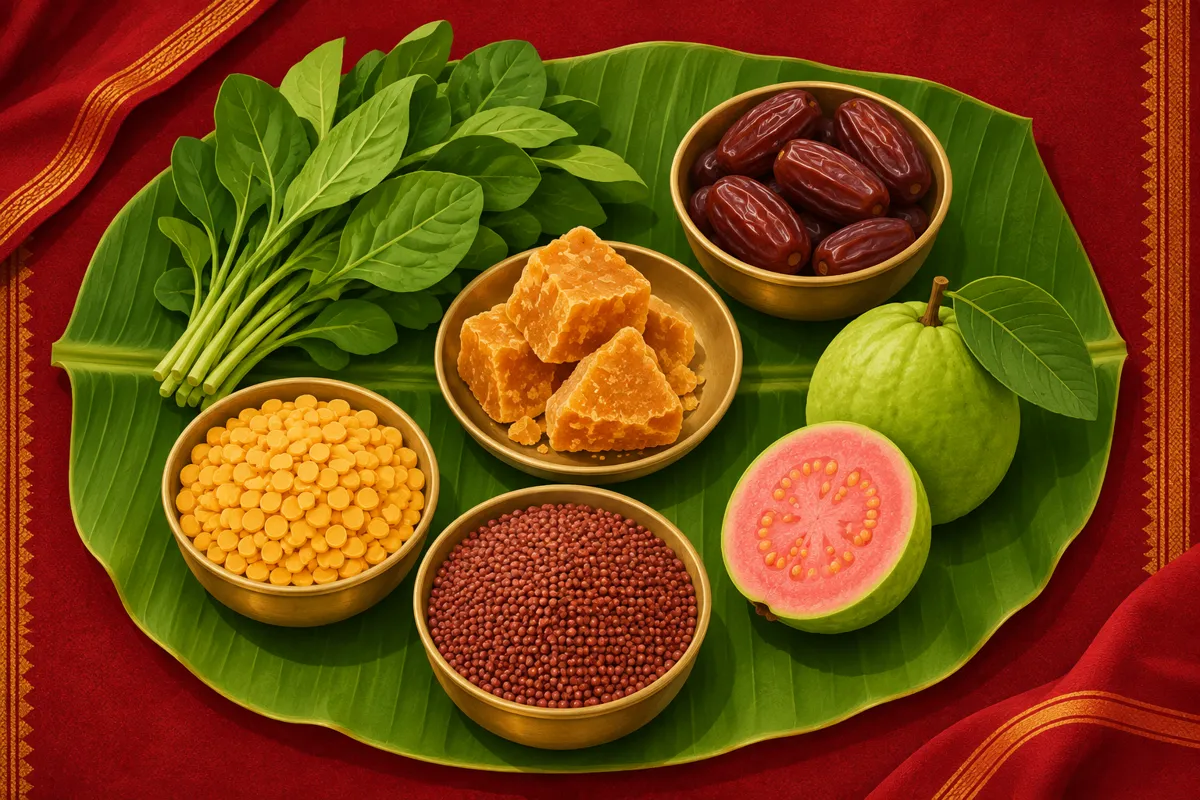
Haemoglobin is built with iron. Each whole blood donation removes some of your body's iron, which is rebuilt from food over the following weeks. This is why the gap between donations is 3 months for men and 4 months for women: it gives your iron stores time to recover.
| Group | Examples |
|---|---|
| Greens | Murungai keerai (drumstick leaves), arai keerai, spinach, amaranth |
| Grains and millets | Ragi, kambu (pearl millet), whole wheat |
| Pulses | Horse gram (kollu), chana, rajma, green gram, lentils |
| Others | Dates, jaggery, sesame (ellu), groundnuts |
| Non-vegetarian | Liver, meat, fish, eggs (the most easily absorbed form of iron) |
Iron tablets should be taken only on a doctor's advice. Too much iron can be harmful.
Eat well, keep the gap, and you can donate safely for years.
This article is general health information, not medical advice. Eligibility is always decided by the doctor at the blood centre. Content to be reviewed by the Department of Immunohaematology & Blood Transfusion, MMC.
"It makes you weak." "It hurts." "Vegetarians can't give." The most common worries we hear at camps, answered.
Why O negative is called the universal red cell donor, why AB is the universal plasma donor, and why every group is needed.
Children with thalassaemia major depend on regular transfusions for life. Repeat voluntary donors are what keep that supply steady.
Take the online pledge and download your certificate. The blood centre calls you when your group is needed.