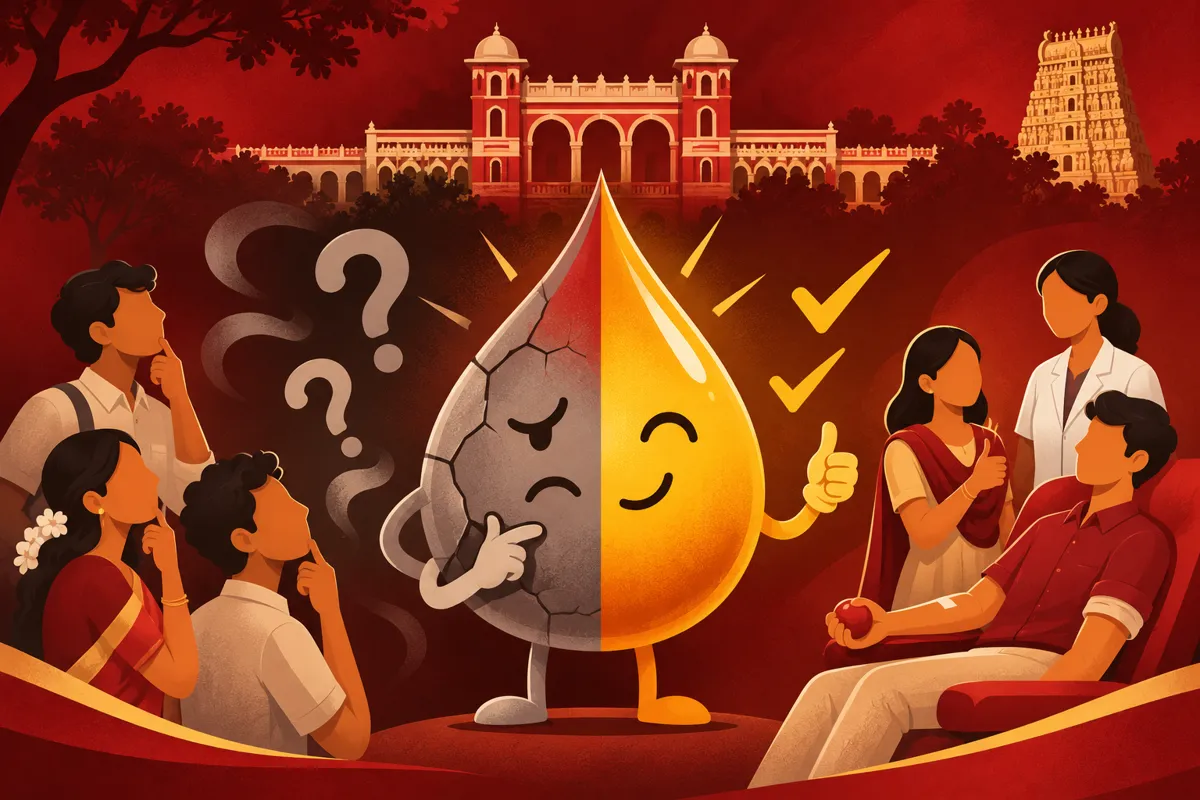
Eight blood donation myths, and the facts
"It makes you weak." "It hurts." "Vegetarians can't give." The most common worries we hear at camps, answered.
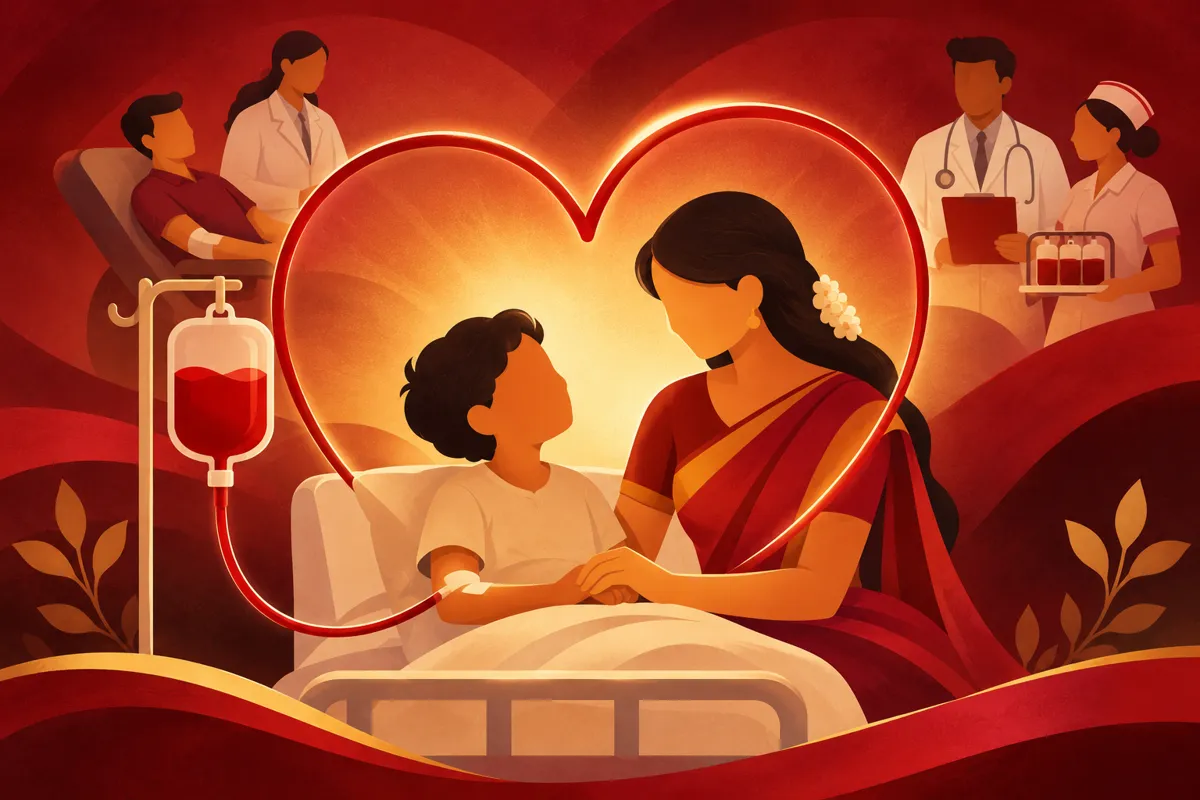
Thalassaemia is an inherited blood disorder in which the body cannot make enough normal haemoglobin, the protein in red cells that carries oxygen. Children born with the severe form, thalassaemia major, become seriously anaemic within the first year or two of life.
For most children with thalassaemia major, the main treatment is a red cell transfusion every two to four weeks, for life. Regular transfusion lets them grow, go to school and lead active lives. Because repeated transfusions load the body with iron, they also need medicines called iron chelators to remove the excess.
Government guidelines on haemoglobinopathies estimate that India has the largest number of children with thalassaemia major in the world, with roughly 10,000 to 15,000 born every year.
A single child with thalassaemia major can need well over a dozen units of red cells every year. Multiply that by the children treated at a large hospital, and the need becomes clear.
Thalassaemia major happens when a child inherits a thalassaemia gene from both parents. People who carry one gene (thalassaemia minor or "trait") are usually healthy and may not know it. A simple blood test can show whether you are a carrier. Testing before marriage or early in pregnancy helps couples understand their risk and the options available. Bone marrow transplantation can cure some children, but it needs a matched donor and is not available to all.
Become a regular donor. Every three months for men, every four months for women. Take the pledge and tell the blood centre you are willing to be called.
This article is general health information, not medical advice. Eligibility is always decided by the doctor at the blood centre. Content to be reviewed by the Department of Immunohaematology & Blood Transfusion, MMC.
"It makes you weak." "It hurts." "Vegetarians can't give." The most common worries we hear at camps, answered.
Why O negative is called the universal red cell donor, why AB is the universal plasma donor, and why every group is needed.
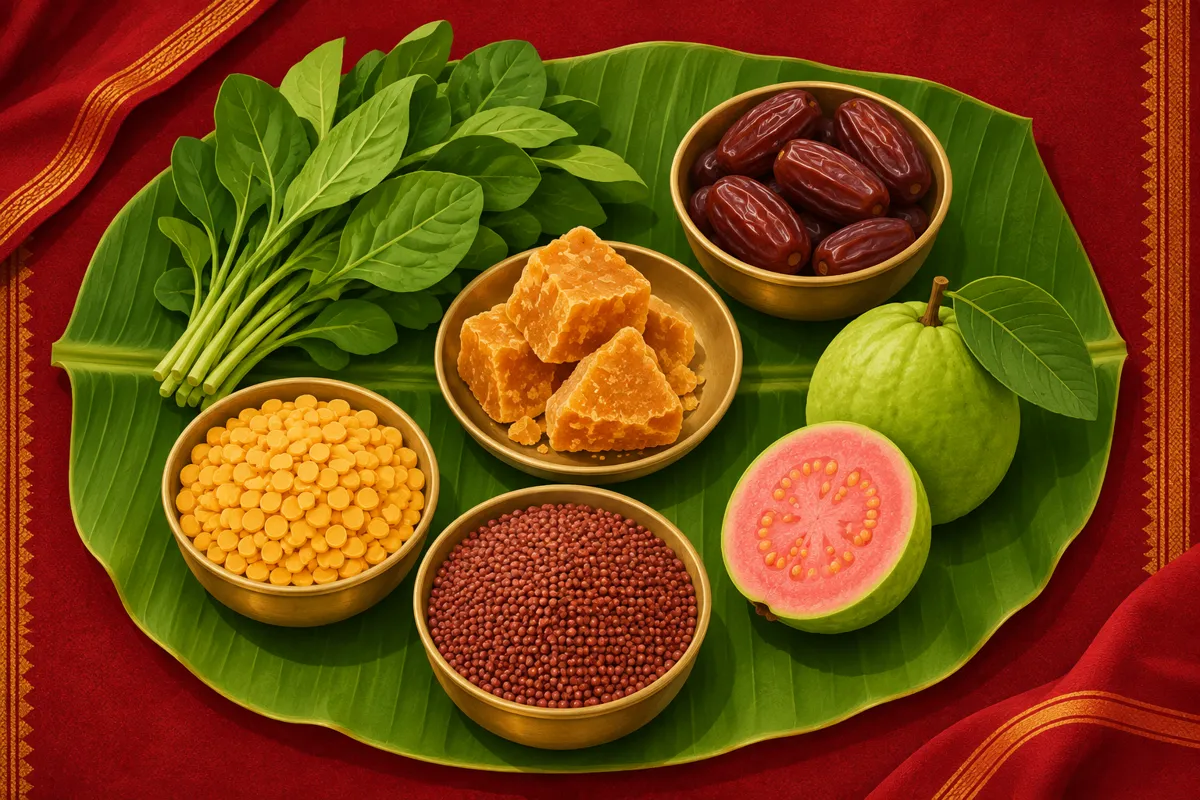
Low haemoglobin is one of the commonest reasons donors are turned away in India. Everyday foods that keep your iron up.
Take the online pledge and download your certificate. The blood centre calls you when your group is needed.